How do you lead with authenticity? Certified organizational coach Bronche Cheng, CPA, discusses how she claimed her own authentic leadership style, and how others can do the same, with CPABC’s director of communications, Vivian Tse.
What does it mean to lead with authenticity in a world that often rewards performance over presence, and logic over empathy? For many professionals, especially in fields like accounting and consulting, leadership has long been defined by technical expertise, strategic thinking, and polished communication. However, as the world changes, our definition of leadership must also evolve.
For me, authenticity is not just a leadership style, it’s a way of being. It’s about showing up as your whole self, not just your professional self. It’s about being vulnerable, sharing your story, and creating space for others to do the same.
 The turning point: Sharing my story
I spent nearly three decades at KPMG, rising to tax partner and later leading talent development. Throughout my career, I was always honest. I never shied away from difficult conversations, and I always made my intentions clear: I wanted my team to grow and succeed. But for a long time, I kept parts of myself hidden, especially the private side of me that didn’t quite fit the mold of a “successful partner.”
That changed in 2021 when I was invited to participate in KPMG’s What’s Your Story campaign, part of the firm’s EDI initiative. I had been asked twice before and declined. But the third time, I said yes. I shared my story as an Asian immigrant, arriving in Canada as a teenager with no network, speaking English as a second language, navigating the corporate world in a Western business culture, and trying hard to change myself to fit in.
Preparing for that campaign forced me to revisit my own journey, and with it, the feelings of shame, insecurity, and fear I had buried for years. I worried about being judged, but I also secretly hoped that someone who looked like me would one day share their story.
The response was overwhelming. I received messages from people I didn’t even know, thanking me for speaking up. Many said, “I feel the same way too.” That was the moment I realized, leadership is about showing up as who you truly are so that others feel safe to do the same.
Authenticity is felt, not claimed
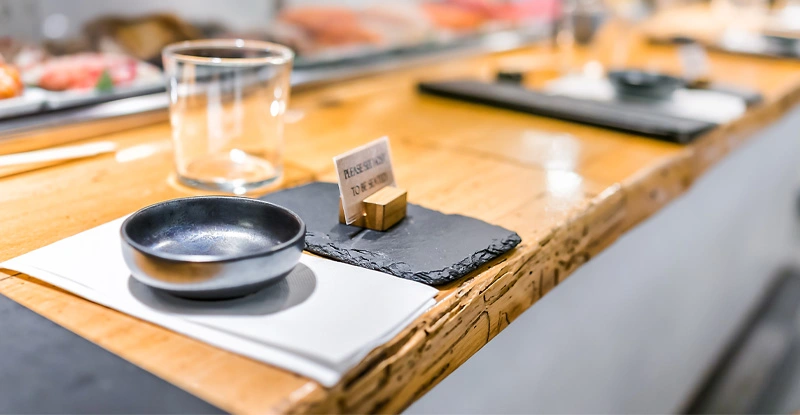
One of my favorite analogies for authenticity is dining at a truly authentic Japanese restaurant. Imagine walking into a space where everything, from the decor to the menu to the way the food is served, feels intentional and true to its roots. You may not have the exact words to describe it, but you feel it.
Now imagine walking into another restaurant with a big sign that says “Authentic Japanese Cuisine,” You open the menu and spot your favourite sushi that you’re going to order. As you wait for the server, you look around the room. You notice folks sitting at the table next to you eating hamburgers. Then you see someone holding tacos in their hands. And at the back of the restaurant, there’s a salad bar. What feelings come up for you? Would you choose this restaurant again?
That’s how authenticity works in leadership. It’s not about what you say, it’s about how people experience you. You can say all the right words, but if your actions don’t align with them or if your actions are inconsistent, people will feel the disconnect. Authenticity is a feeling. Just as beauty is in the eyes of the beholder, authenticity is always from the perspective of the person you interact with.
Holding space for others
As a coach, I’ve learned that one of the most powerful things a leader can do is hold space to create an environment where people feel safe to be themselves, and to speak their minds. To me, that is what cultivating psychological safety in the workplace is about.
Many of us, especially those from cultures that value the collective more than the individual, have been conditioned to suppress our feelings, avoid asking for what we want, and fit in at all costs. These invisible boundaries can constrain our growth and keep us from realizing our full potential. The work I do now is to help people see that many of these boundaries are narratives in our heads, and that we have the power to walk right through them.
Developing our capacity to hold space for others requires us to model the very behaviour we are trying to encourage. Therefore, leaders need to decide what authenticity looks like for themselves in the workplace. It’s helpful to keep in mind that authenticity isn’t binary. It’s not about being completely unfiltered or perfectly polished. It’s about being human.
Imagine yourself showing up behind a tinted glass. You have the ability to adjust the tint and dial up or down the degree to which you allow your true self to be seen. There’s not right or wrong here, and the goal isn’t to be transparent all the time, it’s to be congruent and to show up in a way that feels true to you, while remaining professional and honoring the work environment you’re in.
Read more
- Appreciating the fine “ART” of effective delegation
- The division: Challenges women face in career advancement
- Unlocking the power of unheard voices
Why this matters more than ever
In the age of AI, technical knowledge is no longer a competitive advantage. Tools like ChatGPT and Blue J can generate answers faster and more accurately than many seasoned professionals. Yes, these tools have limitations, but it’s probably not farfetched to think that they will continue improving at a pace we can barely imagine.
So what sets us apart? Trust.
Trust is built on three things: logic, empathy, and authenticity. While training in our profession has traditionally been focused on logic and technical excellence, we need to lean more heavily into the other two. That means investing in emotional intelligence and self-awareness. To show up authentically, you first need to know what you stand for. To do so requires you to slow down and reflect. The more you are able to make sense of your own story, the greater your capacity to understand others. Once you can tell your story, you begin to see and connect with others on a deeper level.
Leading with authenticity is not easy. It requires courage, introspection, and a willingness to be seen—not just for your strengths, but for your imperfections too. But when you do, you create a ripple effect. You give others permission to show up fully. You build trust. And you lead not only with your head, but also with your heart.
The next time you walk into a room, ask yourself: Am I giving myself permission to show up as who I truly am? And am I holding space for others to do the same?
That, to me, is authentic leadership.
Photo courtesy of Denise Lin Photography.
Bronche Cheng, CPA is a certified organizational coach, and former tax partner at KPMG. She now helps leaders unlock their potential through emotional intelligence, storytelling, and authentic leadership.